
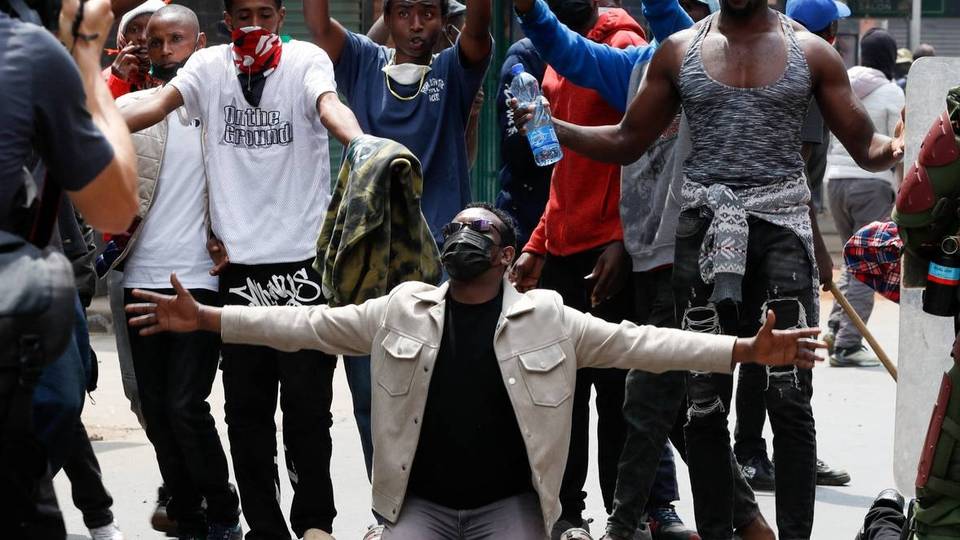
Chronic issues such as unemployment, poverty, and inadequate services have accumulated over the years. Increased taxes was the final straw. Kenyan President William Ruto is often called ‘Zakayo’, the Swahili equivalent of Zacchaeus, the infamous tax collector from the Bible known for his wealth and greed. Events over the past few weeks might have buttressed Kenyans’ none-too-positive views about their leader. For over two weeks, Kenyans have been protesting a new tax bill that would raise taxes on essential items and services, including bread, fuel, sanitary towels, diapers, and mobile money transactions. As the protests turned violent, with at least 39 people killed and 360 injured, President Ruto was forced to concede when he withdrew the controversial bill. However, the country’s already struggling economy has been depriving Kenyans of basic necessities for a long time, and they say the tax bill was merely a catalyst for their widespread outrage. As Kenya grapples with tension in the wake of anti-government protests over now-discarded tax hikes, a top opposition politician, Senator Edwin Sifuna, cautions the country's political class pic.twitter.com/dGdsug7gIx — TRT Afrika (@trtafrika) July 4, 2024 They have no intention of ending their protests until their demands are met, including an economy free of bribery, an end to excessive government spending, improved infrastructure services, and solutions to unemployment. Tax-loan dilemma Ruto's bill aimed to generate over $2.7 billion for Kenya's $30.6 billion budget in 2024-2025, a crucial component of the country's agreement with the International Monetary Fund (IMF), which pushed the government to proceed with the finance bill despite the widespread protests. The government argued that the tax hikes were necessary to manage Kenya's substantial debt, totalling approximately 10 trillion shillings ($78 billion), roughly 70 percent of the country's GDP. Ruto is seemingly confronted with two challenging options in his pursuit of urgently needed funds: either raising taxes or taking on more loans. However, amidst widespread criticism of the extravagant lives of statesmen, another immediate solution emerges: halting the spending spree, which is a major source of frustration for Kenyans. ‘’Today, our country has tremendous respect from many quarters globally because of what I have done,’’ Kenyan President William Ruto says, as he speaks with journalists in Nairobi. He also warns of the economic consequences of the recent rejection of new taxes by protesters pic.twitter.com/OxyyY41Juf — TRT Afrika (@trtafrika) July 1, 2024 According to a report released by the country's auditor general in February this year, the office of the deputy president spent 10.2 million shillings ($70,000) on curtains and allocated around $50,000 for furniture. “Over the past few weeks, we've heard the government repeatedly urging us to live within our means. However, this advice contrasts sharply with the lavish lifestyles of our leaders,” says Stellar Swakei, a senior researcher at Standard Investment Bank based in Nairobi. “As tax hikes are proposed to boost revenues, citizens witness misappropriations, mismanagement, and corruption, which feels like emptying pockets to feed palaces,” she tells TRT World. When Ruto became Kenya's deputy president in 2013 under Uhuru Kenyatta's presidency, the country's debt-to-GDP ratio stood at 50 percent. By 2019, it had risen to 61 percent. Ruto assumed the presidency in 2022, right after the global pandemic left indelible marks on the country’s economy. The debt-to-GDP ratio now exceeds 72 percent, recent data says. Ruto's two years in office were not solely responsible for Kenya's cumulative economic problems. In 2016, the Ethics and Anti-Corruption Commission estimated that Kenya was losing approximately $6 billion, a third of its state budget, annually to corruption. However, the president’s borrowing spree has significantly exacerbated the budget deficit, thereby worsening the daily lives of the Kenyan population during this period day by day, experts say. Analyst Swakei believes that while the finance proposals may make sense for ramping up taxes, “they are relatively punitive and the timing is not appropriate.” ‘If he's not flying, he's lying’ While the protests began peacefully two weeks ago, they have since been marred by violence as agitating mobs looted and vandalised streets in several cities across the country. Kenyans continue to demand accountability over police violence as rights watchdog reports 39 people were killed, 361 injured and 627 arrested in recent anti-tax protests pic.twitter.com/OT1PtNKbti — TRT Afrika (@trtafrika) July 2, 2024 The death toll has now risen to 39 following the deployment of the Kenya Defence Forces (KDF) last week alongside the Kenyan police, which led human rights groups to raise concerns and warn Kenyan forces to stop using ammunition. "Today (Tuesday), the police used tear gas despite the Malindi High Court barring them from doing so," says Hussna Mohamed, a 25-year-old journalist from Nairobi. Hussna highlights the dire situation many face in the country: "Eating three meals a day is not possible, and accessing free healthcare is but a mirage." "Families have to sell their land and belongings to send their children to school, while politicians flaunt citizens' money on designer goods and other luxuries," she tells TRT World. Protester Teddy Odhiambo emphasises that those on the streets are predominantly Gen Z, disillusioned by the government's unfulfilled promises and burdened by severe economic conditions. "Nearly every politician from the ruling party likely owns a private jet or helicopter, while the people who elected them languish in abject poverty, desperation, and youth unemployment," the 24-year-old law student says. "Even after the president rejected signing the finance bill, youth demonstrations persist. This reveals that there is more to this situation than meets the eye." Tensions remain high in Kenya despite President William Ruto withdrawing a controversial tax bill that sparked anti-government protests that have shaken the East African country. Faith Odhiambo, President of Kenya Law Society, tells TRT Afrika the country needs justice to heal pic.twitter.com/0D35tBFiep — TRT Afrika (@trtafrika) June 28, 2024 One of the slogans chanted by protestors was, “If he's not flying, he's lying,” Teddy says, alluding to the president's frequent taxpayer-funded travels and misleading statements whenever he's in office in Kenya. Both Teddy and Hussna, who have been actively participating in the peaceful protests over the last weeks, emphasise that the recent financial plan was merely the tip of the iceberg. While the hard conditions press Kenyans, “the introduction of the bill added fuel to an already burning fire,” Hussna says. While it remains uncertain what the government's next steps will be after quelling the nationwide unrest, people have expectations beyond the tax or loan dilemma. These include reducing IMF loans, lowering taxes to stimulate economic activity, ensuring transparent and accountable spending, eliminating unnecessary expenditures, and creating job opportunities for Kenya's youth, Hussna notes. What matters most in the first place, according to Swakei, is that Kenyans receive services in exchange for their taxes and are effectively represented. “Moving forward, greater engagement from Kenyans, especially the youth, will benefit our nation.” ➤ Click here to follow our WhatsApp channel for more stories.
Haber arşivi
Bu bölüm arşiv haberlerini özgün tarihleriyle gösterir. Haber metni özgün dilinde gösterilmektedir.
Why the controversial tax bill touched a raw nerve in suffering Kenyans
Chronic issues such as unemployment, poverty, and inadequate services have accumulated over the years. Increased taxes was the final straw. Kenyan President William Ruto is often called ‘Zakayo’, the Swahili equivalent of Zacchaeus, the infamous tax collector from the Bible known for his wealth a...
Bu haberde ne var?
Chronic issues such as unemployment, poverty, and inadequate services have accumulated over the years. Increased taxes was the final straw. Kenyan President William Ruto is often called ‘Zakayo’, the Swahili equivalent of Zacchaeus, the infamous tax collector from the Bible known for his wealth a...